Explore by category
How do you repay a reverse mortgage? Understanding your options

In this article:
- Reverse mortgage loan basics
- What triggers a reverse mortgage loan to be repaid?
- Reverse mortgage payoff options
- Reverse mortgage repayment process
- What heirs need to know about reverse mortgage repayment
- What happens when a reverse mortgage cannot be repaid?
- Final thoughts on reverse mortgage repayment
- FAQs about reverse mortgage repayment
Key Takeaways
Home equity conversion mortgages (HECM) reverse mortgages include built-in safeguards for borrowers and their heirs.
Reverse mortgages must be repaid after certain events, such as the borrower moving out of the home, passing away, or no longer meeting the loan obligations.
Borrowers and their heirs can resolve the loan by selling the home, refinancing the balance, or using personal funds.
The repayment process for traditional loans, like home loans or auto loans, is fairly straightforward. You start with a balance and pay it down over a set period of time.
Reverse mortgages, on the other hand, work a bit differently. Instead of making regular monthly payments, the loan balance grows and is repaid in full later, usually after certain conditions are met. That difference can lead to some confusion about how reverse mortgages work.
In this guide, we’ll explore when a reverse mortgage becomes due, and the options borrowers and their heirs typically have to satisfy the loan. Whether you’re thinking ahead for yourself or helping a family member navigate the next steps, having a clear picture upfront can help make the process feel more manageable—and help you avoid any unwanted surprises.
The borrower must meet all loan obligations, including living in the property as the principal residence and paying property charges, including property taxes, fees, and hazard insurance. The borrower must maintain the home. If the homeowner does not meet these loan obligations, then the loan will need to be repaid.
Let’s start with an overview.
Reverse mortgage loan basics
A reverse mortgage is a loan that allows eligible older homeowners to borrow against their home equity. Unlike a traditional forward mortgage, where you pay the loan down each month, a reverse mortgage does not require monthly mortgage payments. Instead, the loan balance grows over time as interest and fees are added.
To keep the loan in good standing, you must live in the home most of the year, continue to pay homeowners insurance and property taxes, and maintain the home. The loan typically becomes due when you sell the home, move out permanently, pass away, or otherwise fail to meet the loan terms.
→ Learn more about how reverse mortgages work in How does a reverse mortgage work?

What triggers a reverse mortgage loan to be repaid?
Reverse mortgages become due under specific circumstances. These situations, often called triggering events, determine when repayment is required. Knowing what they are and what happens next may help you and your family plan ahead.
Death of the borrower or eligible non-borrowing spouse
The most common trigger for reverse mortgage repayment is the death of the borrower. If there is more than one borrower on the loan, repayment is not required until the final surviving borrower passes away.
Home equity conversion mortgage (HECM) loans include spousal protections for certain eligible non-borrowing spouses. If those protections apply, the loan does not become due immediately upon the borrowing spouse’s death, as long as the surviving spouse continues to live in the home as their primary residence and meets the other loan obligations.
To learn more, please visit CFPB’s “Reverse Mortgage: A Discussion Guide.”
The home is no longer the borrower’s primary residence
With a reverse mortgage, the home must remain your primary residence. In general, this means you live there most of the year.
If the borrower moves out permanently or is otherwise absent from the property for more than six months (or 12 consecutive months for medical care), the loan may become due and payable.
The borrower fails to maintain the home
Borrowers must keep the home in good condition throughout the life of the loan. Home maintenance expectations vary by lender and loan type, but typically include maintaining major systems and structural components like the roof, foundation, and plumbing, heating, and electrical systems.
If the lender finds the home is not being maintained, they generally notify you and provide a specified timeframe to complete the required repairs. If maintenance issues are not addressed within that window—even if they are neglected due to changes in your financial situation—the lender may determine that the loan is due.
The borrower fails to pay property taxes or homeowners insurance
With both HECM and proprietary reverse mortgages, borrowers must remain current on property taxes and homeowners insurance. These ongoing costs are not covered by the reverse mortgage and remain the borrower’s responsibility. Failure to pay these costs will result in the loan becoming due. In some cases, the lender may advance funds to cover these costs and add this amount to your loan balance.
The borrower no longer meets other loan obligations
In addition to occupancy, maintenance, and payment requirements, reverse mortgages may include other conditions outlined in the loan agreement. These tend to vary by lender.
It’s worth noting that proprietary reverse mortgages may include additional obligations beyond those required for HECMs. If a borrower no longer meets these requirements, the lender may call for repayment of the loan.
Reverse mortgage payoff options
Most reverse mortgage borrowers repay the loan by selling the home, by taking out a new loan, or using personal funds if they want to keep the property.
There are no prepayment penalties for HECMs, which means you can repay the loan at any time—even before a triggering event occurs —using one of the options below. Understanding how repayment works can help you and your heirs plan ahead and avoid surprises.
Option 1: Sell the home and pay the reverse mortgage back with the proceeds
The most common way to repay a reverse mortgage is to sell the home and use the sale proceeds to pay off the loan. Any remaining home equity belongs to the borrower or their heirs.
HECMs are non-recourse loans1, meaning neither the homeowner nor their heirs will owe more than the home’s value when the loan becomes due and payable. If the home sells for less than the total loan balance, FHA insurance covers the difference.
If you or your heirs prefer to keep the home instead of selling it, the loan may be satisfied by paying the lesser of the full loan balance or 95% of the home’s current appraised value.
Option 2: Refinance the reverse mortgage
Some people choose to refinance the loan instead of selling the home. Depending on eligibility, financial circumstances, and long-term goals, you might opt for a traditional, forward mortgage, or another reverse mortgage.
Refinancing may make sense for borrowers or heirs who want to keep the home and qualify for a new mortgage based on income, credit, and available home equity.
→ Learn more: Can you refinance a reverse mortgage?
Option 3: Take out a new loan
Another way to repay a reverse mortgage is to take out a different kind of loan, such as a home equity loan, personal loan, or even a traditional mortgage, and use the proceeds to pay off the balance.
This approach is more common for heirs who want to keep the home but either can’t or don’t want to refinance into another reverse mortgage.
Finance of America does not currently offer home equity loans.
Option 4: Pay off the reverse mortgage in cash with your own funds
Borrowers and their heirs may also repay the loan with their own funds, such as savings or investment assets. This option may be practical for households with sufficient liquidity.
Option 5: Make voluntary payments while still living in the home
Many borrowers don’t realize they can make payments on a reverse mortgage at any time—not just after a triggering event. Partial payments can be applied to interest or principal, helping reduce the loan balance and preserving more home equity.
This approach is especially useful for borrowers who take a lump-sum payout for a large expense and want to slow balance growth thereafter.
Option 6: Provide a deed in lieu of foreclosure
In some cases, borrowers or their heirs may choose to transfer ownership of the home to the lender through a deed in lieu of foreclosure. This means the home is turned over to the lender so the loan can be resolved without going through the formal foreclosure process. This option may be considered when other repayment options are not feasible.
This chart can help you compare repayment options based on your profile and needs:
| Repayment option | Best suited for | When it’s typically used | Can you keep the home? |
| Sell the home and use sale proceeds | Borrowers or heirs who don’t plan to keep the home | After a triggering event* | No |
| Refinance the reverse mortgage balance | Borrowers or heirs who want to keep the home and qualify for new financing | After a triggering event* | Yes |
| Take out a new loan | Heirs who want to keep the home without another reverse mortgage | After a triggering event* | Yes |
| Pay off the loan with your own funds | Borrowers or heirs with sufficient savings or assets | Any time, even before the loan is due | Yes |
| Make voluntary payments while living in the home | Borrowers who want to reduce balance growth over time | Any time during the life of the loan | Yes |
| Provide a deed in lieu of foreclosure | Borrowers or heirs when other repayment options aren’t feasible | After a triggering event* | No |
*The borrower must meet all loan obligations, including living in the property as the principal residence and paying property charges, including property taxes, fees, and hazard insurance. The borrower must maintain the home. If the homeowner does not meet these loan obligations, then the loan will need to be repaid.

Reverse mortgage repayment process
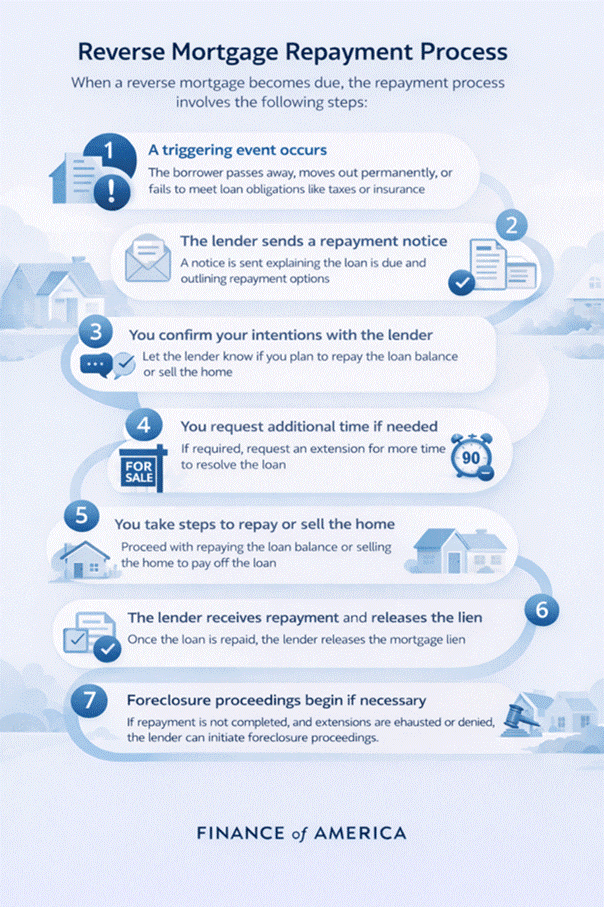
When a reverse mortgage becomes due, repayment follows a structured process. Understanding how it works could help you and your heirs know what to expect, so you can respond confidently at each stage.
- Triggering event occurs: The loan becomes due when the borrower passes away, permanently moves out (such as to an assisted living facility), or fails to meet loan obligations (for example, paying property taxes, maintaining homeowners insurance, or maintaining the home).
- Lender sends a repayment notice: The lender or loan servicer provides a notice explaining why the loan is due, the amount owed, repayment timeline (typically 30 days), available options, and any required documentation.
- Borrower or heirs notify the lender: They confirm whether they intend to keep the home by repaying the loan or sell the property to satisfy the balance.
- Request additional time if needed: If more time is needed, borrowers or heirs may request extensions. For HECMs, extensions are often granted in 90-day increments, subject to U.S. Department of Housing and Urban Development (HUD) guidelines, and demonstrated progress toward repayment or sale.
- Repay the loan or sell the home: Borrowers or heirs either repay the balance (through personal funds, refinancing, or other financing) or sell the home and use the proceeds to pay off the loan.
- Loan is satisfied and lien is released: Once the loan is paid in full, the lender releases the mortgage lien, clearing the property’s title.
- Foreclosure (if necessary): If the loan is not repaid within the required timeframe and no extensions remain, the lender may begin foreclosure proceedings.
What heirs need to know about reverse mortgage repayment
When a reverse mortgage becomes due after a borrower’s death, heirs are not personally responsible for the debt. However, knowing what options are available can help them make more informed decisions during an already difficult time.
Heirs generally have three options when it comes to a reverse mortgage:
- Buy the home: Keep the property by repaying the reverse mortgage loan balance with personal funds or by obtaining financing.
- Sell the home: Sell the property and use the proceeds to repay the loan. Any remaining equity belongs to the estate.
- Walk away: Heirs may choose not to keep or sell the home. In this case, the property is turned over to the lender, and the reverse mortgage is satisfied under the loan’s non-recourse protections1, which means repayment is limited to the appraised value of the home.
Heirs are not required to repay a reverse mortgage using their own personal assets. HECM loans are non-recourse, which means repayment is limited to the appraised value of the home.
How long do heirs have to repay a reverse mortgage?
After the borrower’s death, heirs have 30 days to respond to the lender and confirm their intentions. From there, they are typically given up to six months to repay the loan or complete the sale of the home.
For HECMs, family members may request extensions if they are actively working to repay the loan or sell the property. This may extend the total timeframe to 12 months, depending on HUD guidelines and the circumstances of the case.
→ Learn more: Are heirs responsible for reverse mortgage debt?

What happens when a reverse mortgage cannot be repaid?
If a reverse mortgage is not repaid after a triggering event and the borrower or their heirs miss deadlines, the loan may enter foreclosure. While foreclosure is typically a last resort, it can occur if you fail to respond in a timely manner.
Foreclosure timelines and procedures vary by state and loan type. HECMs include additional consumer protections that may affect how the process unfolds.
→ Learn more in our guide, Reverse mortgage foreclosure: How it happens and what to do next.
Final thoughts on reverse mortgage repayment
Reverse mortgages must be repaid eventually and understanding what leads to repayment can help borrowers and their heirs plan ahead with confidence. Whether that means selling the home, refinancing the loan balance, using personal funds, or working with the lender on timelines, there are typically multiple repayment options.
Considering a reverse mortgage? See how much cash you may be eligible to access using our reverse mortgage calculator.
FAQs about reverse mortgage repayment
Are there any tax implications when paying back a reverse mortgage?
Generally, repaying a reverse mortgage is not a taxable event because reverse mortgage proceeds are not considered income. However, tax situations vary, so it’s best to consult a tax professional for guidance specific to your circumstances.
Not tax advice. Consult a tax professional.
Can you pay back a reverse mortgage early?
Yes. Most reverse mortgages, including HECMs, allow early repayment at any time without prepayment penalties, whether you’re paying down part of the balance or the full loan.
Do heirs inherit the reverse mortgage debt?
No, they inherit a home with a lien that must be repaid; they do not inherit the debt itself and are not required to pay the loan off using personal assets.
Does interest keep accruing after the borrower dies?
Yes. In most cases, interest continues to accrue after the borrower dies until the reverse mortgage is repaid. The loan balance keeps increasing because interest and, if applicable, mortgage insurance premiums continue to be added until the loan is paid off.
Can a surviving spouse stay in the home?
It depends. Non-borrowing spouses may have the right to stay in the home for some reverse mortgages if they are an eligible non-borrowing spouse. Learn more in The non-borrowing spouses’ guide to reverse mortgages.
How do I get out of a reverse mortgage early?
You can get out of a reverse mortgage early by paying the loan back at any time. If you are within three days of closing, you may also be able to use the three-day right of rescission. Learn more about how to get out of a reverse mortgage.
1Non-recourse means that you, or your estate, can’t owe more than the value of your home when the loan becomes due and the home is sold.
Non-recourse means that if you default on the loan, or if the loan cannot otherwise be repaid, the lender cannot look to your other assets (or your estate’s assets) to meet the outstanding balance on your loan.
About the author

is the Web Content Manager at Finance of America and a journalist with more than 10 years of experience whose work has appeared in MoneyWise, MSN, Yahoo! Finance, and The Motley Fool. She specializes in making complex financial topics accessible and is passionate about advancing financial literacy.
Disclaimer
This article is intended for general informational and educational purposes only and should not be construed as financial or tax advice. For tax advice, please consult a tax professional. For more information about whether a reverse mortgage fits into your retirement strategy, you should consult your financial advisor.