Explore by category
Can you get a reverse mortgage on a mobile home?
In this article:
- What is the difference between a mobile home and a manufactured home?
- What are the FHA requirements for mobile homes or manufactured homes?
- How does a reverse mortgage work for a manufactured home?
- How to apply for a reverse mortgage for a manufactured home
- Frequently asked questions about reverse mortgage for mobile homes
Quick Answer: No, you cannot get a reverse mortgage on a mobile home because it is considered a vehicle. However, you may be eligible to take out a reverse mortgage on a manufactured home, provided it meets FHA standards and you meet eligibility requirements.
Key takeaways
You cannot get a reverse mortgage on a true mobile home because it is typically classified as a vehicle, not real estate.
Manufactured homes may be eligible if they were built after June 15, 1976, meet HUD construction standards, and are permanently attached to an FHA-approved foundation.1
To be eligible for a reverse mortgage, the home must be titled as real property, and the borrower must meet standard reverse mortgage eligibility requirements.
More than 22 million people—roughly 7% of the U.S. population—live in manufactured or mobile homes, according to research by the Manufactured Housing Institute. For many older homeowners, these properties may be a significant portion of their net worth, so it makes sense to wonder whether you can take out a reverse mortgage on your mobile home.
The short answer: You generally cannot get a reverse mortgage on a mobile home. Mobile homes are typically classified as vehicles, not real estate, which makes them ineligible for federally insured reverse mortgage loan options and most proprietary reverse mortgages.
However, the term “mobile home” is also used casually to refer to manufactured homes. You may be eligible for a reverse mortgage for a manufactured home if it meets specific requirements from the Department of Housing and Urban Development (HUD) and the Federal Housing Administration (FHA), including being permanently attached to a foundation and titled as real estate.
In the sections below, we’ll walk through the key differences between mobile vs. manufactured homes, reverse mortgage eligibility requirements, and what options you might have.

What is the difference between a mobile home and a manufactured home?
For the purposes of a reverse mortgage, a mobile home is a movable vehicle that may be used as a dwelling but is registered as a vehicle—think the iconic silver Airstream or the vehicles commonly used by #vanlife influencers.
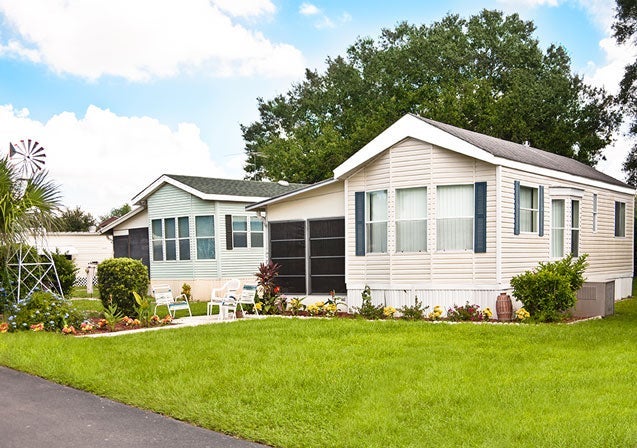
A manufactured home is permanently attached to a foundation and cannot be easily moved. Examples include a single-wide manufactured home with a living room, full bedrooms, bathrooms, and maybe even a porch.
While the terms mobile home and manufactured home are often used interchangeably in casual conversation, the distinction is critical when it comes to reverse mortgage eligibility. This chart outlines the core differences.
| Category | Mobile home | Manufactured home |
| Definition | A movable vehicle with a chassis that may be used as a dwelling and is registered as a vehicle. | A factory-built home permanently attached to a foundation, designed for residential living. |
| Mobility | Designed to be moved from place to place with ease, often with attached wheels. | Not easily moved once installed, but technically portable. |
| Foundation | Not permanently attached to a foundation. | Permanently attached to a fixed foundation. |
| Reverse mortgage eligibility | Not eligible for a reverse mortgage. | Potentially eligible if all other requirements are met |
To learn more, please visit the CFPB’s “Reverse Mortgage: A Discussion Guide.”
What are the FHA requirements for mobile homes or manufactured homes?
In short, to be eligible for an FHA-insured reverse mortgage, a manufactured home must meet HUD construction and safety standards, be permanently attached to an approved foundation, and titled as real property. Homes built before June 15, 1976, are generally not eligible. Additional inspections may also be required.
The longer answer is more nuanced. In 1976, HUD implemented national construction and safety standards for manufactured housing, known as the HUD Code. The standards cover structural integrity, fire safety, plumbing, electrical systems, thermal protection, and more. (See 24 CFR Part 3280 for more information.)
All manufactured homes built after June 15, 1976, must comply with the HUD Code. Homes built prior to this date typically are not eligible for a federally insured Home Equity Conversion Mortgage (HECM).
HUD requirements, in addition to general reverse mortgage eligibility requirements, include:
- HUD certification label: The home must have a red HUD tag on each transportable section.
- Meet size and design requirements: The home must be at least 400 square feet and have a permanent chassis designed to ensure initial and ongoing transportability. The home must be permanently attached to a foundation that complies with FHA guidelines.
- Up to code: The home must meet all local zoning and building codes.
- Foundation inspection: The home must undergo a foundation inspection conducted by a licensed professional engineer.
If your mobile home does not meet FHA foundation standards, you may still have options, such as upgrading the foundation to be eligible for a reverse mortgage. However, if your manufactured home was built before June 15, 1976, it is typically not eligible for a federally insured HECM.

How does a reverse mortgage work for a manufactured home?
A reverse mortgage for manufactured homes may allow eligible older homeowners to convert a portion of their home equity into cash without making monthly mortgage payments. Instead of paying the lender each month, the loan balance is paid out to the homeowner through the payout option they choose. The loan balance grows over time and is repaid when the home is sold, the borrower moves out permanently, passes away, or otherwise no longer meets the terms of the loan.
The borrower must meet all loan obligations, including living in the property as the principal residence and paying property charges, including property taxes, fees, and hazard insurance. The borrower must maintain the home. If the homeowner does not meet these loan obligations, then the loan will need to be repaid.
The most common reverse mortgage product is the federally insured HECM reverse mortgage. To potentially be eligible, you’ll need to meet several eligibility standards, including:
- Be 62+ years old
- Live in the home as your primary residence
- Have significant home equity
- Be able to continue paying property-related costs such as homeowners insurance, taxes, and HOA fees
- Maintain the home
- Attend counseling with a HUD-approved counselor (for HECM)
- Not be delinquent on federal debt, such as federal income taxes or student loans
- Ensure the property meets HUD and FHA property standards
Funds may be received as a lump sum, line of credit, monthly payments, or a combination. Borrowers remain responsible for property taxes, homeowners insurance, and maintaining the home.
→ For a more detailed look at reverse mortgages, read our guide, What is a reverse mortgage and how does it work?
How to apply for a reverse mortgage for a manufactured home
Applying for a reverse mortgage on a manufactured home follows a clear process. Here’s what to expect, step by step:
1. Determine if your manufactured home meets FHA guidelines
Not all mobile or manufactured homes meet the requirements for a reverse mortgage. To be eligible for an FHA-insured HECM, the home typically must:
- Be built after June 15, 1976
- Be permanently affixed to an approved foundation
- Meet HUD construction and safety standards
- Be classified as real property (not personal property)
A lender may help review your property details to confirm eligibility.
2. Determine if you meet the reverse mortgage eligibility requirements
To be eligible for a reverse mortgage, you must, at minimum:
- Be at least 62 years old (55+ for some proprietary reverse mortgages)
- Live in the home as your primary residence
- Have significant equity in the home
- Be able to maintain the property and stay current on property taxes, homeowners insurance, and HOA dues (if applicable)
- Attend a required counseling session with HUD-approved counselor (HECM)
Your lender will also perform a financial assessment to review income, credit, and property charges to ensure you’re able to meet ongoing obligations.
→ Learn more about eligibility requirements in our guide: What are reverse mortgage eligibility requirements?
3. Attend a reverse mortgage counseling session
Before applying, you may be required to attend a session with a HUD-approved reverse mortgage counselor. If you are applying for a HECM reverse mortgage, this step is required by federal regulations, and many proprietary reverse mortgages include this obligation as well.
This independent session helps ensure you understand how a reverse mortgage works, your responsibilities, and potential alternatives to a reverse mortgage. You’ll receive a counseling certificate upon completion, which is required to move forward.
4. Choose a lender and fill out an application
Once counseling is complete, you may select a reverse mortgage lender and begin the formal application process.
Your lender will:
- Review your counseling certificate
- Collect income, asset, and property documentation
- Order required third-party services (such as appraisal and title work)
- Explain available loan options and payment plans
During this stage, you’ll complete and sign initial loan disclosures and provide documentation to support the financial assessment. Your lender will guide you through each step and answer any questions so you understand the loan terms, costs, and next steps before moving forward.
5. Home appraisal
An FHA-approved appraiser will evaluate the home to determine its current market value. For manufactured homes, the appraisal may also confirm:
- The home is permanently affixed to a HUD-approved foundation
- The property meets HUD construction and safety standards
- The home is classified as real property
- The home does not have structural or safety issues that affect eligibility
In some cases, additional inspections or repairs may be required before the loan moves forward.
6. Closing
Once underwriting is complete and all conditions are satisfied, your loan will be scheduled for closing. At closing, you’ll:
- Review and sign final loan documents
- Confirm your payment option
- Receive a breakdown of loan costs and obligations
After closing, there is typically a three-business-day right of rescission period, allowing you time to cancel the loan if you choose.
7. Loan disbursement
After the rescission period ends, reverse mortgage funds are disbursed according to the payment plan you selected. Depending on your choice and the type of loan, you may receive:
- A lump sum
- Monthly payments
- A line of credit
- Or a combination of these options
You remain responsible for property taxes, homeowners insurance, HOA dues (if applicable), and maintaining the home as your primary residence.
→ Learn more in our guide: Understanding your reverse mortgage payout options.

Interested in reverse mortgage loans for your manufactured home?
While the terms mobile home and manufactured home are often used interchangeably, the distinction matters when it comes to reverse mortgage eligibility. Only manufactured homes built after June 15, 1976, that meet HUD and FHA requirements qualify for an FHA-insured reverse mortgage.
If you’re unsure whether your home meets these standards, a knowledgeable reverse mortgage lender could review your property details and help you understand your options. Even if upgrades are needed, there may still be a path forward depending on your home’s construction, foundation, and classification.
Find out what you might be eligible for with our reverse mortgage calculator.
Frequently asked questions about reverse mortgage for mobile homes
What eligibility requirements must a mobile or manufactured home meet for a reverse mortgage?
To be eligible, the home must usually be built after June 15, 1976; be HUD-certified; be on a permanent foundation; be titled as real property; and be the borrower’s primary residence. The borrower must also meet other reverse mortgage requirements, including meeting age requirements, living in the home as a primary residence, completing any required counseling, and being able to pay ongoing home costs including homeowners insurance, HOA fees, and property taxes.
Can I get equity out of my mobile home?
Yes, but it depends on how the home is classified. If it is titled as real property and meets HUD requirements, a reverse mortgage may be possible. If it is considered personal property, other loan options may apply.
What’s the difference between a mobile home and a manufactured home for reverse mortgage purposes?
For reverse mortgage eligibility, the differences come down to construction date, foundation, and property classification. A mobile home typically refers to a movable structure not permanently attached to a foundation, often classified as personal property; these are not eligible for a HECM loan.
A manufactured home must meet HUD construction and safety standards, be permanently attached to an approved foundation, and be classified as real property. Manufactured homes that meet FHA requirements may be eligible for a reverse mortgage.
What counts as a “permanent foundation” when looking at a reverse mortgage for a mobile home?
A manufactured home must be attached to a foundation that meets HUD/FHA requirements, which includes: being constructed of durable materials and meeting structural requirements for both vertical and lateral stability.
The home must be anchored to the foundation to prevent uplifting or sliding due to wind or seismic activity, and have a base footing below the maximum frost-penetration depth. Screw-in soil anchors are not considered permanent anchorage.
Are there lenders that won’t do reverse mortgages on mobile/manufactured homes?
Yes, some lenders avoid these loans due to stricter underwriting requirements, even if the home technically meets eligibility requirements. Finding a lender experienced with these properties may be important.
Can I get a reverse mortgage loan on my manufactured home if it’s on leased land?
Generally, no. Manufactured homes located on leased land, such as a mobile home park, are not eligible for an FHA-insured reverse mortgage (HECM) because the property typically must be classified as real estate and permanently affixed to land you own. However, some proprietary (non-FHA) reverse mortgage products may have different guidelines.
1 These materials were not provided by HUD or FHA and were not approved by FHA or any government agency.
About the author

is the Web Content Manager at Finance of America and a journalist with more than 10 years of experience whose work has appeared in MoneyWise, MSN, Yahoo! Finance, and The Motley Fool. She specializes in making complex financial topics accessible and is passionate about advancing financial literacy.
Disclaimer
This article is intended for general informational and educational purposes only and should not be construed as financial or tax advice. For tax advice, please consult a tax professional. For more information about whether a reverse mortgage fits into your retirement strategy, you should consult your financial advisor.