Explore by category
Fall prevention: A homeowner’s guide

In this article:
If you’ve been to the doctor lately, you were likely asked, “Have you had any falls in the last year?” As we age, falls become a bigger risk, not just for our health, but also to our independence.
A recent study by the Centers for Disease Control and Prevention (CDC) found that falls are the leading cause of injury among adults ages 65 years and older. And every year, 1 in 4 older adults report falling. Falls don’t just result in bruises or broken bones—the CDC also reported that the age-adjusted fall death rate increased by 21% between 2018 and 2024.
Due in part to the prevalence of falls and the serious impacts they can have on our lives, September has been designated as Fall Prevention Awareness Month. But fall prevention matters all the time, not just in September.
This guide will cover why fall prevention matters, steps you can take beyond just modifying your home, and answer questions about funding any modifications you may need to stay safe and live independently for longer.
Why fall prevention matters
As we age, falls may become more common—and their effects may be more serious. While some falls result in little more than a bruise, others may lead to injuries such as broken bones, hip fractures, or head injuries. In serious cases, a fall may affect mobility and make it harder to live independently. In extreme cases, they can result in death.
Falls can have an emotional impact, too. After a fall, many older adults experience a loss of confidence and begin avoiding activities they once enjoyed. But becoming less active may affect strength, balance, and mobility over time—potentially increasing the risk of another fall.
“Falls, even those without any lasting injuries, can be emotionally traumatic to adults, jarring one’s sense of confidence,” Karin Ouchida, M.D., a geriatrician at The Center on Aging at Weill Cornell Medicine in New York City, told AARP.
That’s why fall prevention is about more than avoiding injury. It’s about taking proactive steps to help protect your independence and continue doing the things that matter to you. By identifying potential risks and making thoughtful changes to your home and daily routines, you may be able to reduce your risk of falling while staying active, confident, and comfortable at home.

Why older adults fall: Common risk factors
Falls rarely have just one cause. In most cases, a combination of physical, medical, and environmental factors increases the likelihood of a fall. And, as risk factors add up, the overall risk of falling can increase.
According to the AARP, common risk factors include:
- Changes in strength and mobility: Muscle weakness, changes in balance or gait, and problems with the feet or lower body may make it more difficult to move around safely.
- Changes in vision: Age-related changes in eyesight may make it harder to spot obstacles, judge distances, or navigate areas with low or changing light.
- Medications: Some medications, as well as health conditions that affect strength, balance, alertness, or cognition, may contribute to fall risk.
- Health conditions: Vision or hearing changes, foot conditions, diabetes, or an abnormal heart rhythm can increase your risk for falling at home.
- Hazards around the home: Pets, loose rugs, cluttered walkways, poor lighting, slippery surfaces, and a lack of handrails or grab bars may create opportunities for falls.
- Fear of falling: Worry about another fall may cause some older adults to become less active. Over time, reduced activity may affect strength and balance, potentially making falls more likely.
The good news is that many of these risk factors can be addressed. Understanding where the risks are is an important first step toward creating a safer home and supporting continued independence.
Beyond home safety: Medical steps to reduce fall risk
When you think about fall prevention, home safety changes like removing loose rugs, securing cords, and installing grab bars may come to mind first. Those changes are important, but they’re only one part of the picture. Taking a closer look at your health may help you uncover risk factors you didn’t know were there.
→ Learn more about reducing fall risk in your home: Home modifications for aging in place.
Review your medications with a doctor or pharmacist
Medications that make you feel sleepy, dizzy, lightheaded, or unsteady may increase your risk of falling. And it isn’t necessarily just one prescription that matters. Your healthcare provider or pharmacist should review everything you take—including prescription medications, over-the-counter medicines, and supplements—to look for side effects or combinations that could contribute to falls.
If there is a concern, your provider may recommend adjusting a dose, changing a medication, or exploring other options like mobility aids. Never stop taking a prescribed medication without first speaking with your healthcare provider.
Get your hearing and vision checked
Seeing and hearing what’s happening around you are both important for navigating your environment safely. Changes in eyesight or hearing that happen gradually may not always be obvious, but both may contribute to falls as we age.
Keep up with regular eye exams and talk with your healthcare provider if you notice changes in your hearing. An eye doctor may also identify issues such as cataracts or other vision problems that could make it harder to see obstacles or judge your surroundings.
Ask about health conditions affecting balance
Feeling unsteady isn’t always simply a normal part of getting older. According to the Cleveland Clinic, health issues like a stroke, movement disorders, and diabetes-related neuropathy, as well as some medications, can increase the risk of a fall. A drop in blood pressure when you stand up—known as orthostatic hypotension—may also cause dizziness or lightheadedness.
If you’ve noticed dizziness, weakness, numbness in your feet, changes in the way you walk, or difficulty keeping your balance, mention it to your healthcare provider. Depending on the cause, they may recommend treatment or refer you to another professional, such as a physical therapist or podiatrist.
Take a fall risk screening test
You don’t have to wait until you’ve fallen to find out whether you’re at risk. A fall risk assessment looks at your history of falls, medications, vision, balance, strength, and walking pattern to identify areas where you may benefit from extra support. Cleveland Clinic recommends that adults 65 and older receive an initial fall risk assessment.
“Falls are often the result of multiple, interconnected issues—and that’s where a specialized assessment makes all the difference,” Anne Vanderbilt, MSN, RN, CNS, CNP, shared on the Cleveland Clinic website. “By taking a comprehensive, patient-centered approach, we’re able to identify the root causes and intervene in ways that truly protect our patients’ safety, independence, and quality of life.”
Want a quick starting point at home? The National Council on Aging offers a no-cost Falls Free CheckUp® with 13 questions about factors such as balance, previous falls, medications, and mobility. You can share the results with your healthcare provider to start a conversation about your individual risk.
Add balance and strength training
Staying active can play an important role in fall prevention. A Cochrane review of multiple studies found that exercise programs reduced falls among older adults by about 23%. Balance and functional exercises reduced falls by 24%, while programs that combined these activities with resistance training reduced falls by about 34%.
The key is choosing activities that actually challenge and improve balance and strength. Depending on your abilities, that might include Tai Chi, yoga, and functional movements such as repeatedly sitting and standing from a chair. A physical therapist may also be able to help you develop a program around your mobility and individual fall risk.
If you’re new to exercise, have already experienced a fall, or feel unsteady on your feet, talk with your healthcare provider before beginning a new exercise program.
Learn how to fall—and get back up
No prevention strategy can completely eliminate fall risk. That’s why it’s also important to know what to do if you lose your balance. If you feel yourself falling, Harvard Health recommends bending your knees, relaxing your body rather than stiffening up, falling to the side or an open area if possible, and twisting your shoulders to protect your head.
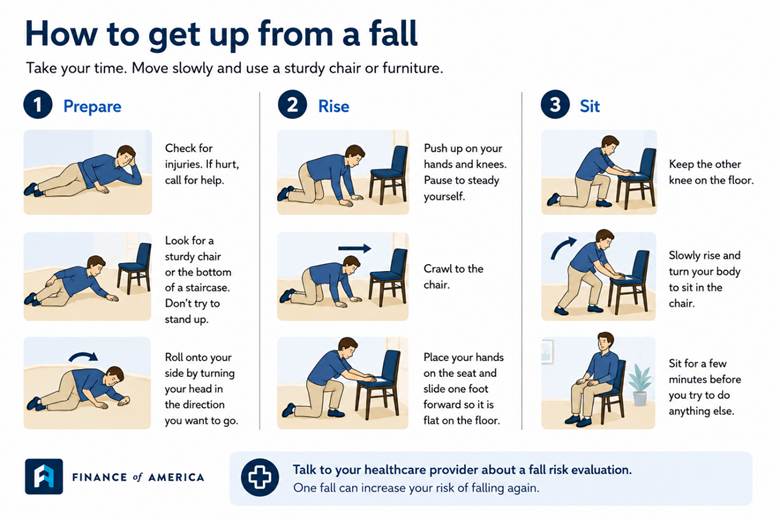
Knowing how to safely get back up is important, too. Physical therapist Brianne Carroll told AARP she recommends practicing the steps ahead of time, almost like a fire drill, so you know what to do if a fall occurs.
If you do fall, the AARP suggests first checking yourself for pain or injuries before trying to move. If you’re hurt or unable to move without pain, stay where you are and call for help. If you feel OK, take your time and:
- Roll onto your side and slowly move onto your hands and knees.
- Crawl toward a sturdy chair, couch, or other stable piece of furniture.
- Place your hands on the furniture and bring your stronger leg forward, placing your foot flat on the floor.
- Use the furniture for support as you slowly rise and turn to sit down.
- Stay seated for a few minutes before continuing with your day.

Does Medicare pay for fall prevention?
Medicare doesn’t have a specific “fall prevention” benefit, but original Medicare may cover several services that can reduce your risk of falling.
For example, Medicare Part B covers a yearly wellness visit, which includes a review of your medications and health risks and may help start a conversation with your provider about fall prevention. Medicare also covers some diagnostic hearing and balance exams when ordered by a healthcare provider.
If problems with strength, balance, or mobility are contributing to your risk, Part B may also help pay for medically necessary physical therapy or occupational therapy. Medicare may also cover certain durable medical equipment, such as walkers and canes. However, it generally doesn’t cover non-medically necessary items or AgeTech devices.
If you have a Medicare Advantage plan or other plans, your coverage may differ from original Medicare, so check with your plan to see what fall-prevention services or benefits may be available.
How to pay for home modifications to limit fall risk
Some fall-prevention updates are fairly inexpensive, such as removing loose rugs or adding night lights. Others—like installing grab bars and railings, remodeling a bathroom, or adding a stair lift—may require a larger investment. If savings aren’t enough to cover the cost, homeowners may consider using their home equity.
Here are a few options:
- Home equity line of credit (HELOC): A HELOC lets you borrow against your home equity as needed, rather than taking all the money at once. This flexibility may make it useful for modifications completed in stages or when you’re not sure exactly how much the work will cost. HELOCs typically have variable interest rates and require monthly payments after the draw period ends.
- Home equity loan: A home equity loan provides a lump sum that’s generally repaid in fixed monthly payments. It may be a good fit for a larger, one-time project with a known cost, such as a bathroom renovation or stair lift. (Finance of America does not offer home equity loans.)
- Reverse mortgage: For eligible older homeowners, a reverse mortgage may allow you to access a portion of your home equity without required monthly mortgage payments, as long as you meet the loan terms, including living in the home as a primary residence, maintaining the home, and paying taxes and insurance.
- Second-lien reverse mortgage: This type of reverse mortgage may allow eligible homeowners to access additional equity without replacing their existing first mortgage. You will have to continue to meet the terms of your first mortgage, but it may be an option for homeowners who want funds for home improvements while keeping a first mortgage in place.
The best fit depends on the cost of the project, how much home equity you have, your existing mortgage, and whether taking on a new monthly payment fits your budget.

Preventing falls can help you age in place longer
Fall prevention is about taking practical steps so you can continue doing the things you love with more confidence. Staying active, talking with your healthcare providers, addressing potential risks around your home, and making modifications that support your changing needs may all help you create a safer environment for the years ahead.
Most importantly, you don’t have to wait until after a fall to take action. By thinking proactively about your health and your home today, you may be better prepared to stay active, comfortable, and independent as you age.
→ Curious if a reverse mortgage is an option for you? Use our no-obligation reverse mortgage calculator.
To learn more, please visit the CFPB’s “Reverse Mortgages: A Discussion Guide”
FAQ
Can you use a reverse mortgage to pay for fall prevention home modifications?
Generally, yes. Reverse mortgage proceeds may be used for most home modifications, including projects designed to improve safety and accessibility. These may include installing grab bars, railings, ramps, or a stair lift, or making bathroom modifications.
What is the safest flooring for older adults?
There is no single safest flooring for every older adult. Generally, flooring that is firm, slip-resistant, level, and free of loose rugs or other tripping hazards are the safer choices. The best flooring may depend on your mobility and whether you use a walker, wheelchair, or other mobility aid.
At what age does fall risk increase?
Fall risk generally increases after age 65. According to the CDC, falls are a leading cause of injury for adults age 65 and older. Individual risk also depends on factors such as strength, balance, medications, vision, health conditions, and the home environment.
What is the number one cause of falls in older adults?
There usually isn’t one single cause of falls in older adults. Falls often result from a combination of risk factors, including problems with balance or walking, muscle weakness, medications, vision changes, health conditions, and hazards in the home.
What is life expectancy after a fall?
A fall does not have a specific life expectancy associated with it. Outcomes vary widely depending on a person’s overall health and whether the fall causes a serious injury. While many people recover from falls, hip fractures or head injuries may lead to serious complications, making prevention and prompt medical attention important.
What is included in a fall risk assessment?
A fall risk assessment typically evaluates factors that may make you more likely to fall. A healthcare provider may review your fall history, medications, medical conditions, vision, balance, walking ability, muscle strength, and mobility, and may perform simple tests to assess how safely you move.
This article is part of our ongoing series on aging in place. If you’re just getting started, check out our other published articles below:
- How to age in place – a planning guide for homeowners
- Aging-in-place checklist – preparing for independent living
- Aging-in-place home modifications – making your home safer and more accessible
- Solo aging: How to play for care, costs, and your future – for those without nearby support
- What is Age Tech? – learn how tech can support your aging-in-place plans
- How to care for aging parents – a guide for adult children
About the author

is the Web Content Manager at Finance of America and a journalist with more than 10 years of experience whose work has appeared in MoneyWise, MSN, Yahoo! Finance, and The Motley Fool. She specializes in making complex financial topics accessible and is passionate about advancing financial literacy.
Disclaimer
This article is intended for general informational and educational purposes only and should not be construed as financial or tax advice. For tax advice, please consult a tax professional. For more information about whether a reverse mortgage fits into your retirement strategy, you should consult your financial advisor.